Blender Lens Sim v3 Addon Crack September 2025 Download
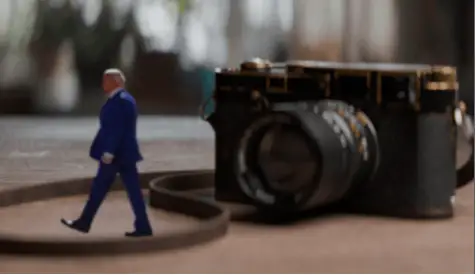
Render with Real-World Lenses
Lens Sim is a Blender addon created to simulate camera lenses based on real-world optical data. By extending the standard blender camera you can easily choose and render dozens of lenses in Cycles. By simulating the physical characteristics of glass and the aperture opening we get common lens effects such as chromatic aberration, vignetting, distortion, lens softness, focus breathing and natural bokeh shapes. These effects contribute to the organic, imperfect look of physical photography. The standard camera provides an idealized, perfect clean render that misses out on these unique characteristics, making images feel sterile or too “perfect,” which can detract from a “film-like” look. This addon inspires to improve that.
Anamorphic lens in action, notice the lens breathing and oval bokeh shape.
Closeup showing the chromatic aberration.
Choose between an extensive selection of lenses, each carefully modeled with real-world data to provide a broad range of simulation possibilities. From wide-angle to telephoto.
Each lens has a unique bokeh shape and distortion profile.
Dive into the world of macro photography with specialized lenses that excel at capturing tiny objects. Perfect for showcasing delicate subjects, such as flowers or small objects.
Model by abdoubouam
Experience the magic of tilt-shift photography, by shifting and tilting the lens, you can manipulate perspective, giving your images an intriguing and surreal quality.
Scene by Piotr Krynski
Soft lenses offer a creative way to introduce a gentle aesthetic into your work. These lenses create an inviting and dreamy atmosphere, enhancing the mood and emotional depth.
Scene by Gleb Alexandrov
Key Features
Full Blender Integration Lens Sim is seamlessly integrated with Blender’s native camera and Cycles rendering engine. With multi-camera support, you can maintain your standard workflow when designing shots. Whether you are starting from scratch or adapting current scenes, the process of creating and converting cameras is simple and intuitive.
With a single click, you can extend your Blender camera into a Lens Sim camera.
By tracing a single ray from the focus object to the lens, we can determine the ideal sensor position for that distance, removing the necessity of manual lens focusing.
Real-World Accuracy Built on actual lens patent data, Lens Sim replicates the optical characteristics of real-world lenses, from intricate distortions to natural bokeh. Experience professional-grade optical effects like chromatic aberration, lens distortion, focus breathing, and precise depth of field. You get true-to-life results without needing complicated geometry setups.
Custom Lens Design You can easily create your own unique lenses, adjust their specifications to suit your needs, save your designs for future use, and share them with friends and fellow enthusiasts. Unleash your creativity and take your optical projects to the next level!
Each lens is implemented through a built-in data table.
By guiding rays towards the aperture opening we get little to no loss of rays at higher f-stops
Render Farm Compatibility Lens Sim works native within Blender, without relying on the addon itself during rendering. This means once your scene is set up, Lens Sim’s features are fully integrated into Blender’s system, allowing it to run seamlessly on any render farm that supports Blender.
Editing Tools Tailor lenses to specific scenes by adjusting parameters like custom chromatic aberration ramp, tilt shift, add extra lens distortion, use a custom aperture image, emulate anamorphic effects, add swirliness to your bokeh, extend the field of view beyond the original lens design and add lens dirt.
Changelog:
3.0.0:
NB! The setup has gone through a major code rewrite and is now using OSL camera shaders to
render the lenses. This version is therefore not compatible with older Lens Sim cameras.
Currently, OSL camera shaders only works with NVIDIA OptiX GPU’s and CPU in Blender 4.5+.
Version 2.#.# is now in a maintenance state. If major issues are found, I will look into them.
New features will not be added, as development time will be focused on the OSL camera shader.
Other breaking changes:
-Sensor Width parameter on anamorphical lenses is now maintained when desqueezing the image
Also affects Sensor Best Fit Size
-Removed some features due to no texture support in OSL camera shaders
-Lens Dirt, Type 2 is removed
-Prism Filter is removed
-Aperture image is still working but the image resolution is greatly redused
-Presets saved with this version is in general not backwards compatible
Setup now uses OSL camera shaders for rendering:
-Much faster lens tracing (~50% faster)
-Less complicated internal setup, easier to handle and less prone to errors
-Lens object and the lens material is no longer needed
-Parameters are stored as Custom Properties directly on the camera
-Propper parameter descriptions is used instead of question mark buttons (for the most part)
-Upgrading or adding new features is less prone to error, no longer dealing with a material setup
-Now uses the standard camera focusing parameters
-Better compability with other setups (standard focusing methods, no object in front of the camera)
New features:
-Eyedropper distance picker when in manual focusing mode and for the Split Diopter
-Preference option: Camera Creation -> Use Focus Empty
-Preference option: Camera Creation -> Create Collection
-Preference option: Camera Creation -> Simplified Lens Model As Default
-Dolly Zoom: Advanced Settings -> Camera -> Object (also in quick access panel)
-Aperture Blades can now be set under the Aperture panel, same option in the Lens Data panel
-Button to align the Tilt X parameter to cameras tilt
-Added a Tile View mode to help when calibrating the lens foocus
-Rewrote the lens FoV sampling for better viewport representation of the simulated lens
Set the FoV Sampling Pos: Advanced Settings -> Camera -> Object
Preference option: Camera Creation -> Converted Lens FoV Sampling Position
-Match Camera Parameters: Advanced Settings -> Camera -> Object
Match lens FoV from a set Sensor Size and Focal Length
Improvements/Tweaks:
-Popup Panel will no longer close based on mouse proximity
-Added Undo function to object altering buttons, like delete camera, add/remove Lens Sim setup.
No longer need for a affirmative popup window
-Cameras exclouded from the view layer can no longer be selected from the camera list
-Squeeze factor will now be calculated on the fly if not overwritten in the Lens Data panel
-Tilt Shift (Shift only) now uses the standard camera Shift X/Y parameters
-Increased max lens elements to 30
-F-Stop can now be set to non-physical values
Uses the same function as the DoF Factor to extend the depth of field outside it’s physical limits
-Focusing empty is not created until it’s being used for the first time
-Parameters using mm as unit type is now using the “DISTANCE_CAMERA” as subtype
-Added lens data folders to the Info Window
-Focus Object can now be selected from the main panel (button with a cursor object)
-User lenses placed in subfolders will now have it’s own folder section in the lens menu
-A lens surface with the radius greater or equal to 100.0m will now be considered as flat surface
Uses a ray plane function to ensure flatness
-If DoF Remove is set to 1.0, a warning icon on the F-Stop parameter will show
-Emulation->Distortion rays is no longer clamped to 180 degrees
-Improved various tooltips and help texts, especially for the Lens Data section
-Added Show Camera Limits to the focusing section
-Added Focus Bone when Focus Object type is an Armature
-Asphere Conic Constans increased from 6 to 10
-Link to the built in bokeh textures is now accessible from the Aperture Image preset layout
Bugs and fixes:
-Apsheric surfaces was not correctly marked when Split View was disabled in the Render Schematics
-Zoom factor is forced to 0.0 when calculating cameras focal length in schematic mode
-Version and camera detection is more stable
-Lens sorting function is more stable
-Photonstophotos importer: Lenses that has R1, R’1 as lens indexes (in the data table) should now work
-Fixed a ghosting issue with the Split Diopters
-When focus distance is < 0.0001m, it will calculate the viewport FoV with a focusing distance
of 0.5m to avoid issues in the calculation. This will not affect the render
New lenses:
-Simplified Lens Model
Replicates the standard blender camera, but with the added Lens Sim functionality
-10mm f3.5 Samsung Fisheye
-15mm f2.8 Sigma EX DG Diagonal Fisheye
-20mm f4.0 Nikon Nikkor
-22mm f2.05 Canon STM
-24mm f1.8 Sigma EX DG Aspherical Macro
-30mm f2.0 Samsung
-30mm f3.5 Sony E Macro
-37mm f2.9 Mir-1
-45mm f1.8 Samsung
-50mm f2.0 Jupiter-8
-60mm f2.8 Samsung Macro ED SSA OIS
-70mm f2.4 Ricoh HD Pentax-DA Limited
-90mm f4.0 Agfa Color Telinear
-167mm f5.0 Single lens system, 2x Anamorph Adapter
-200mm f4.0 Leica Telyt
Downloads: show love to dev by purchasing if you can afford it
IF THE LINKS ARENT WORKING, THEN PLEASE ACT LIKE A GROWN UP AND MESSAGE ME/ COMMENT HERE OR ON DISCORD AND I WILL UPDATE THESE LINKS QUICKLY! MAKE SURE YOU DOWNLOADING PROPER FILE WITH PROPER EXTENSION LIKE .ZIP OR .RAR
Filename:Lens Sim v3.0 vfxMed.zip
Official Discord : https://discord.gg/M2kqB4M9tG
USE IDM FOR FASTER DOWNLOAD.



Post Comment